grinding wheel types · abrasive grain types · grinding wheel selection · aluminum oxide · silicon carbide
Grinding Wheel Types: Abrasive Grain Selection Guide
Choose the right grinding-wheel abrasive by workpiece, cutting behavior and edge result. Compare A, WA, SA, ZA, C and GC grains before specifying a wheel.
Choose the right grinding-wheel abrasive by workpiece, cutting behavior and edge result. Compare A, WA, SA, ZA, C and GC grains before specifying a wheel. Start by confirming the machine, wheel position and application before comparing a replacement wheel or requesting a quote.
Quick answer
Select a grinding-wheel abrasive by matching grain behavior to the workpiece and process, not by hardness alone. As a practical starting point:
- A — brown fused alumina: tough, durable and widely used for carbon steel, alloy steel and other high-tensile metals.
- WA — white fused alumina: cleaner-cutting and more friable than A; often considered for hardened steel, stainless steel and applications where lower grinding heat matters.
- SA — single-crystal alumina: tough single-crystal structure for demanding alloy and hardened-steel grinding.
- ZA — zirconia fused alumina: high toughness and wear resistance for heavy stock removal and heat-resistant steels.
- C — black silicon carbide: sharp and thermally conductive; commonly used for cast iron, brass, rubber, plastics, wood, stone and concrete.
- GC — green silicon carbide: high-purity, sharp and hard; suited to hard, brittle materials such as cemented carbide, glass, stone and ceramics.
These symbols are useful shorthand, but they do not define a complete wheel. Confirm the grit size, bond, grade, structure, concentration, wheel shape, dimensions, maximum speed and coolant conditions before ordering.
What is abrasive grain in a grinding wheel?
A grinding wheel is a working system rather than a single material. The abrasive grain performs the cutting, the bond holds the grains in place, and the pores or structure provide space for chips, coolant and controlled grain release. Wheel performance comes from the interaction of these elements.
The abrasive grain is commonly described by its chemistry and behavior:
- Hardness describes resistance to scratching or penetration.
- Toughness describes how well a grain resists impact and fracture.
- Friability describes how readily a grain breaks to expose a new sharp edge.
- Grain shape affects cutting pressure, heat, surface finish and wheel life.
This is why a sharp silicon carbide grain can be a better choice for glass or cast iron even when a different grain appears tougher, and why a tough alumina grain can be preferred for repeated steel stock removal. The correct balance depends on the actual process.
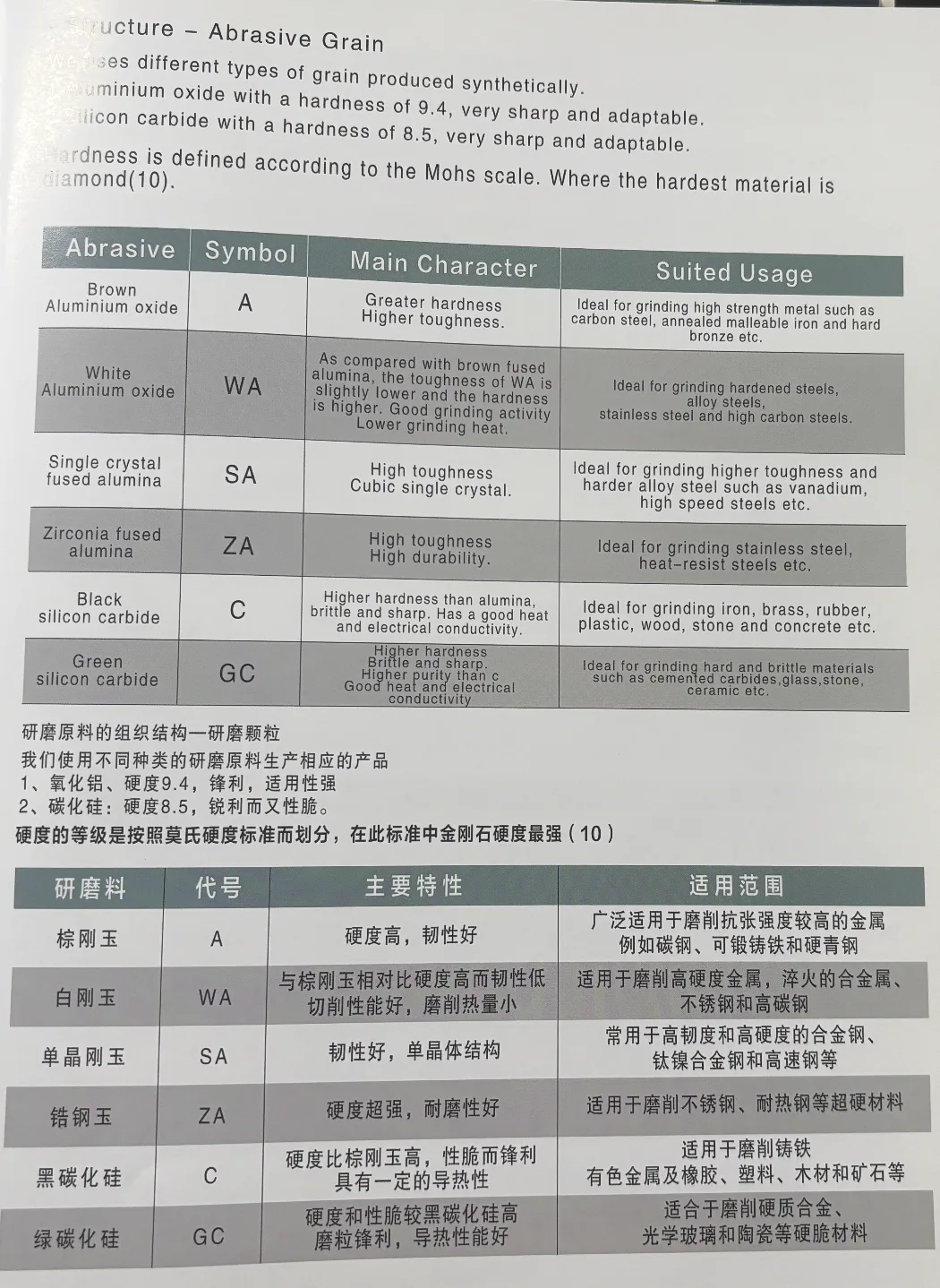
A, WA, SA, ZA, C and GC grain comparison
| Abrasive | Symbol | Main characteristics | Typical applications |
|---|---|---|---|
| Brown fused alumina | A | Tough, durable and adaptable; a balanced choice for general grinding | Carbon steel, annealed malleable iron, hard bronze and general ferrous-metal grinding |
| White fused alumina | WA | More friable and often cooler-cutting than brown alumina; renews cutting edges readily | Hardened steel, alloy steel, stainless steel and high-carbon steel |
| Single-crystal alumina | SA | Tough single-crystal structure; supports demanding grinding conditions | High-toughness or high-hardness alloy steel, tool steel and high-speed steel |
| Zirconia fused alumina | ZA | High toughness, durability and resistance to heavy grinding wear | Stainless steel, heat-resistant steel and high stock-removal operations |
| Black silicon carbide | C | Sharp, hard and thermally conductive; fractures to renew cutting points | Cast iron, brass, rubber, plastics, wood, stone, concrete and selected non-ferrous materials |
| Green silicon carbide | GC | High-purity, sharp and hard; effective on hard, brittle materials | Cemented carbide, optical glass, stone, ceramics and other brittle hard materials |
The table is a selection guide, not a universal grade chart. Manufacturers may use different internal formulations, grain treatments and naming conventions. Treat the symbol as the starting point for a technical review.
How to choose the grain by workpiece
Carbon steel and general ferrous metals
Start by evaluating A brown fused alumina when the job needs a durable, general-purpose grain and stable wheel life. It is a practical option for carbon steel and many high-tensile ferrous materials. If the material is hardened, the grinding heat is high or the required finish is more demanding, compare WA, SA or a ceramic alumina option with the wheel manufacturer.
Hardened steel, tool steel and stainless steel
Hardened steel and stainless steel can require a sharper or more friable grain to control heat and maintain cutting action. WA is a common comparison point; SA can be considered when toughness and high hardness are both important; and ZA is relevant when heavy stock removal and durability dominate. Wheel grade, bond and coolant remain decisive.
Cast iron, brass and other non-ferrous materials
Black silicon carbide (C) is often considered for cast iron and selected non-ferrous materials because its sharp grain cuts readily. Brass, aluminum and similar materials can also load a wheel, so open structure, dressing practice, coolant and the bond should be reviewed together with the abrasive.
Glass, stone, ceramics and cemented carbide
For hard and brittle non-metallic materials, C black silicon carbide and GC green silicon carbide are the main families to compare. GC is generally positioned for harder, more brittle and precision-oriented applications. The best choice depends on whether the priority is stock removal, edge integrity, surface finish, dimensional control or polishing preparation.
Hardness is not the same as toughness
One of the most common selection mistakes is to treat a hardness number as a performance ranking. A harder grain may resist wear, but a grinding process also needs the grain to fracture or release at the correct moment. If it holds too long, the wheel can glaze; if it breaks too easily, wheel life and dimensional stability may suffer.
Use these questions to frame a better selection:
- Is the workpiece hard, soft, ductile or brittle?
- Is the operation roughing, dimensioning, sharpening or finishing?
- Is the pressure light or heavy?
- Is heat control more important than wheel life?
- Does the process need a sharp free-cutting wheel or a durable wheel?
- Is the next operation polishing, coating removal or another grinding stage?
Do not specify the grain symbol alone
For a replacement or custom grinding wheel, send the complete application information:
- Workpiece material, hardness and dimensions.
- Operation and material-removal target.
- Existing wheel symbol, grit, grade, structure and bond, if known.
- Wheel shape, outside diameter, thickness, bore and working layer.
- Machine spindle speed, feed rate, contact area and dressing method.
- Coolant type and flow, plus the defect to solve—loading, glazing, burn, vibration, chipping or short life.
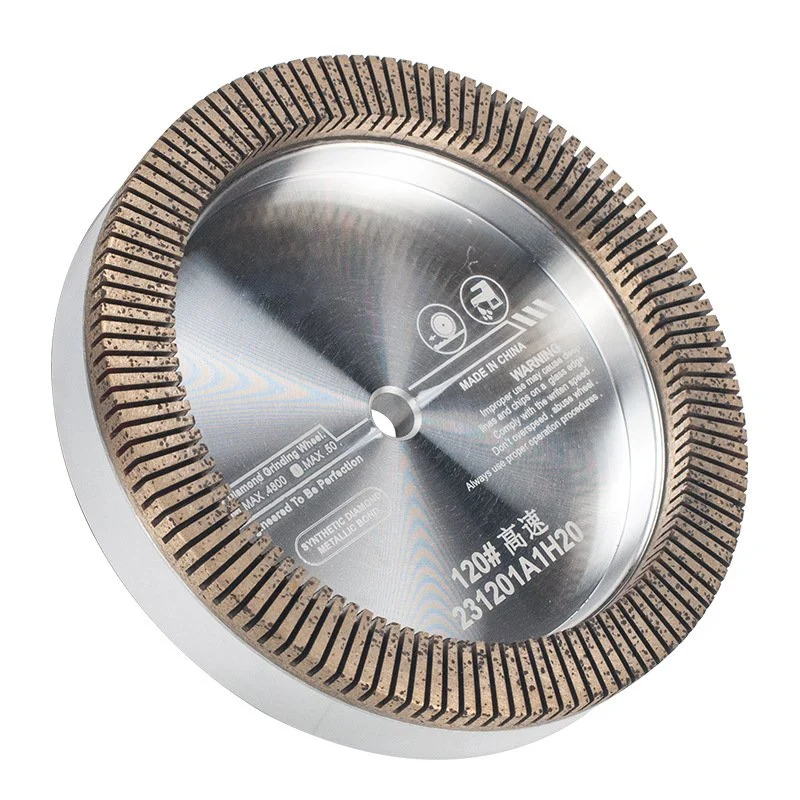
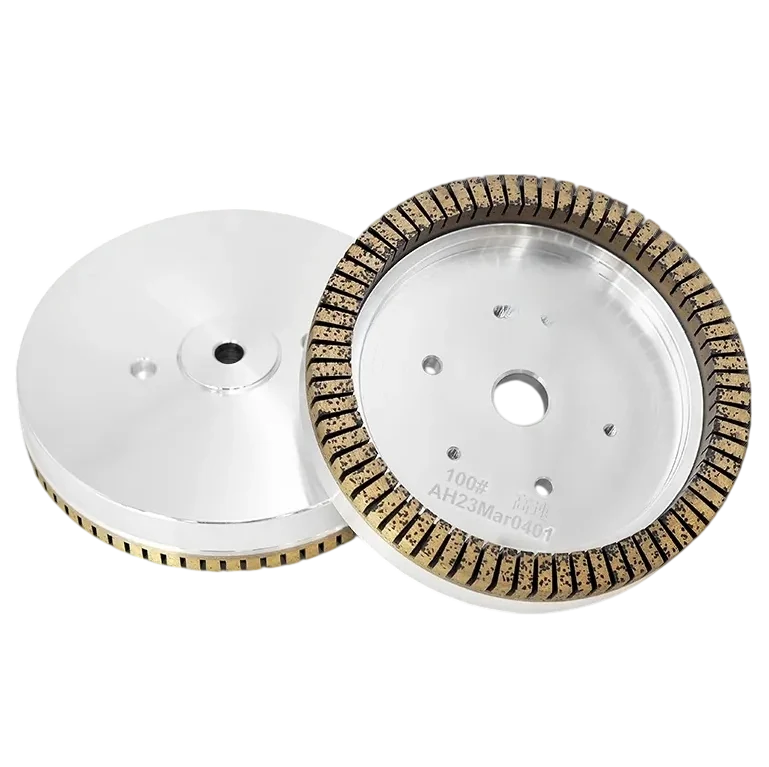
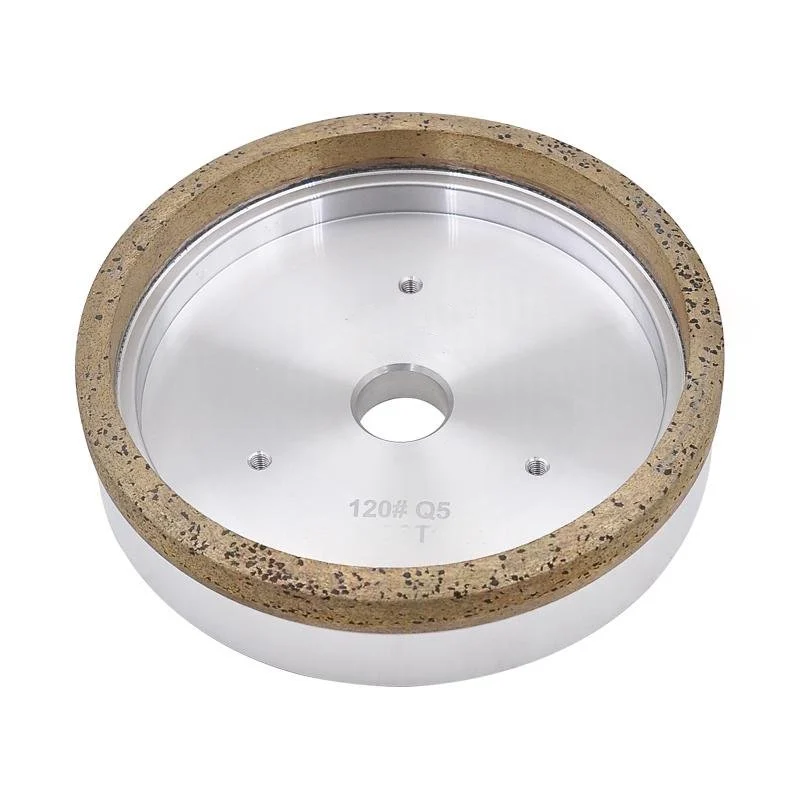
For a glass, stone or carbide application, a photo of the current wheel and the machine label is useful, but dimensions and the target edge result are still needed. You can also review the glass grinding wheel product range or send the application to ZHUIFENG.
Key takeaways
The abrasive grain is the cutting component of a grinding wheel, but the grain symbol is only one part of the specification. Use A and WA as starting points for many steel applications, compare SA and ZA when toughness or heavy removal is critical, and consider C or GC for non-ferrous, glass, stone, ceramic and carbide work. Then validate the choice against grit, bond, wheel grade, structure, speed, coolant and the required finish.
Technical references
Frequently asked questions
What is the most common abrasive grain for steel grinding?
Brown fused alumina (A) is a common starting point for general grinding of carbon steel and other high-tensile ferrous metals because it combines useful cutting action with toughness. The final choice still depends on hardness, stock removal, wheel bond and the machine.
When should I use silicon carbide instead of aluminum oxide?
Silicon carbide (C or GC) is commonly considered for cast iron, non-ferrous metals, glass, stone, ceramics and other hard, brittle or non-ferrous materials. Its sharp, friable grain can cut efficiently under lighter pressure, but the complete wheel specification must be checked for the application.
Is a harder abrasive grain always better?
No. Abrasive hardness is only one property. Toughness, friability, grain shape, grit size, bond, wheel grade and operating conditions determine whether the grain cuts, fractures and renews at the right rate.
Can the same abrasive grain be used in every grinding-wheel bond?
Not automatically. Grain chemistry and shape must work with the bond, wheel structure, speed, coolant and workpiece. A wheel maker should confirm the full specification rather than selecting from the grain symbol alone.